The Ultimate Wedding Day Timeline for Better Video
A wedding day timeline built around your video, when to schedule the first look, golden hour, and toasts so your film actually captures the moments that matter. Sample timelines included.
Most couples build their wedding day timeline around the caterer and the DJ. Then they hand it to their videographer the week before and hope for the best.
We get it. There are a hundred moving parts, and the schedule usually gets locked in by the venue or planner long before anyone thinks about the film. But here's the truth: a few small choices in your wedding day timeline are the difference between a film that feels rushed and one that feels like a movie.
We've filmed 200+ weddings, and the days that produce the best films almost always share the same timeline decisions. None of them cost extra money. They just take a little foresight.
Why Your Timeline Decides Your Film
Light, time, and energy, that's what a videographer is working with all day. Your timeline controls all three.
Schedule your couple portraits at high noon and we're fighting harsh shadows. Cram the first look, family photos, and portraits into 30 minutes and everything feels frantic on camera. Skip the buffer time and we spend your reception filming you stressed instead of celebrating.
The best wedding films aren't made in the edit, they're made in the schedule. A good timeline gives every moment room to breathe, which is exactly what makes a film feel cinematic instead of documentary-by-accident.
How Many Hours of Coverage Do You Actually Need?
This is the first timeline question, because it determines everything else. The most common question we hear is how many hours for a wedding videographer, and the honest answer is: enough to get from getting ready to a few songs into the open dancing.
Here's what different coverage lengths realistically capture:
- 6 hours, The essentials. Final getting-ready moments, ceremony, portraits, and the early reception (entrances, first dance, toasts). This is our minimum, and it works beautifully for smaller or single-venue weddings.
- 8 hours, The sweet spot for most couples. Full getting-ready, first look, ceremony, golden hour portraits, and reception through the bouquet toss and into open dancing.
- 10 hours, The full story. Adds detail-rich getting-ready coverage, travel between venues, and enough reception time to capture the party actually peaking.
- 12+ hours, Multi-venue, large guest counts, or cultural ceremonies with multiple events. Nothing gets left out.
Most of our couples land on 8 to 10 hours. If your getting-ready location and ceremony are far apart, add an hour for travel, it's the most commonly underestimated block on any timeline.
When you're ready to map this to a real number, our live package builder shows your exact total as you adjust hours, so you can see what each extra hour actually costs.
The Anatomy of a Video-Friendly Timeline
Every wedding is different, but a film-friendly day moves through the same building blocks. Here's how to think about each one.
Getting Ready (60–90 minutes of coverage)
This is where the story starts and where the details live. Your dress on the hanger, the rings, the handwritten vows, the quiet moment with your parent before everything begins.
Have your details ready before we arrive. Gather the invitation suite, rings, shoes, jewelry, perfume, and any heirlooms in one place. It saves 20 minutes of hunting and gives us time to film them properly.
Build in time to be almost ready when we start filming. Final touches photograph and film far better than the messy middle of hair and makeup.
The First Look (20–30 minutes)
A first look is one of the highest-impact decisions for your film. It's a private, emotional moment with no crowd watching, and it almost always becomes a centerpiece of the highlight edit.
It also unlocks your timeline: doing portraits and family photos before the ceremony means you're not missing cocktail hour, and golden hour stays free for couple portraits.
Not sure whether it's right for you? We broke down the full case in our guide to the first look, including the alternatives if you'd rather wait for the aisle.
Ceremony (varies, protect the edges)
The ceremony itself runs on its own clock, but two buffers matter for video:
- 15 minutes before, Time to set up audio (we mic the officiant and capture clean vows) and second-camera angles without rushing.
- 5 minutes after, The recessional, the hug from a parent, the exhale. Some of the best candid moments happen right after the "I do."
Golden Hour Portraits (20–30 minutes)
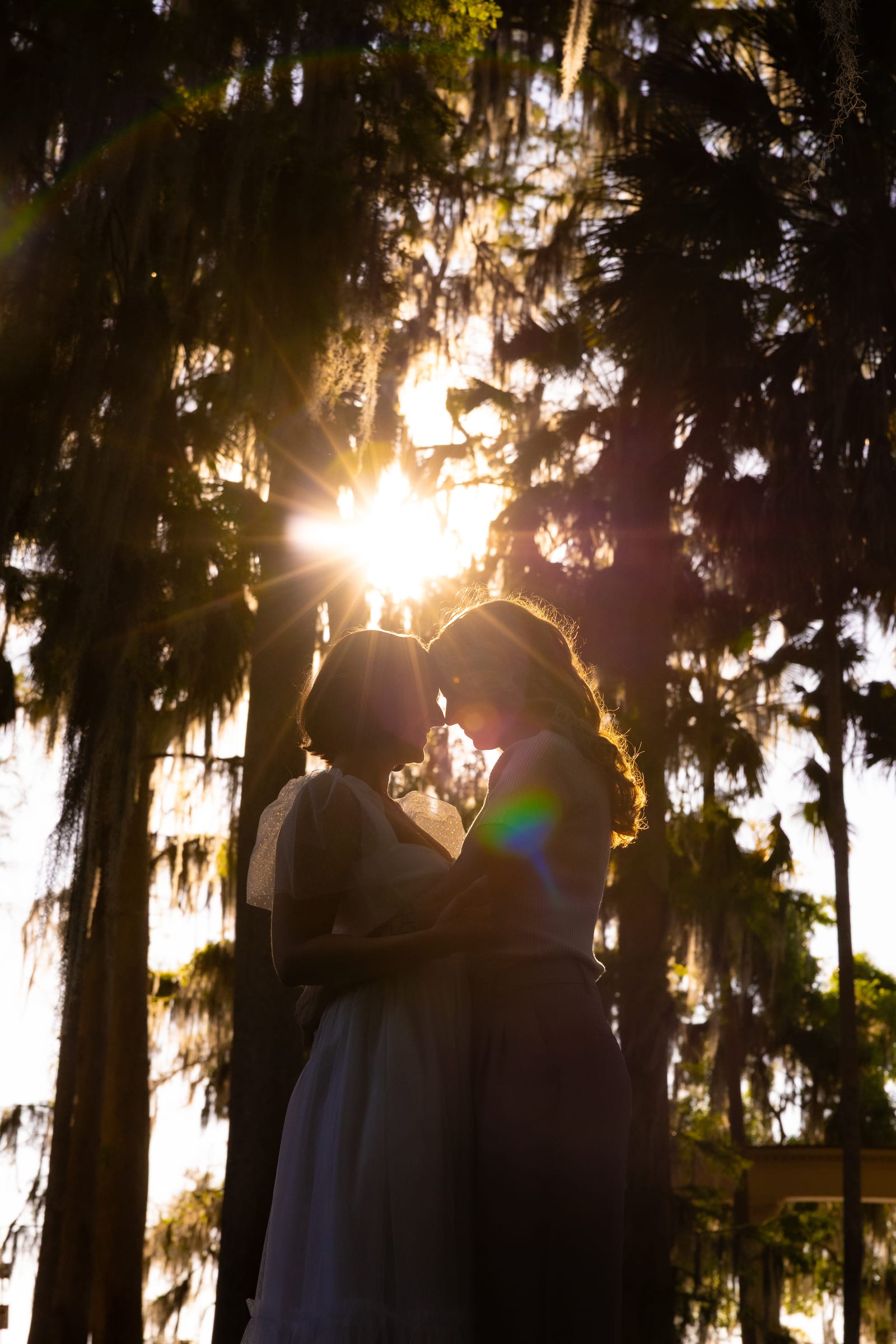
If there's one thing to build your timeline around, it's this. Golden hour, the 30–45 minutes before sunset, is when a wedding film looks like a feature movie. Soft, warm, directional light that no amount of editing can fake.
Look up your sunset time and carve out a 20-minute window just before it for couple portraits. Stepping away from the reception for even 15 minutes during golden hour produces the shots couples are most glad they got.
Reception (the back half of your coverage)
Entrances, first dance, toasts, parent dances, cake, open dancing. The key timeline move here is front-loading the formal moments so they happen while energy is high and light is good, then letting the party run.
If you want a few minutes of packed dance floor in your film, make sure your coverage extends at least 2–3 songs into open dancing. An empty floor early on doesn't tell the story; the peak of the party does.
A Sample 8-Hour Wedding Day Timeline
Here's a realistic single-venue timeline with an early-evening ceremony and a sunset around 7:30 PM. Adjust everything to your own sunset and ceremony time.
- 2:00 PM, Coverage begins. Getting-ready details and final hair/makeup.
- 3:00 PM, Both partners dressed and ready.
- 3:30 PM, First look and private vows.
- 4:00 PM, Couple portraits + wedding party photos.
- 4:45 PM, Family formals.
- 5:15 PM, Tuck away / freshen up before guests arrive.
- 5:30 PM, Ceremony.
- 6:00 PM, Cocktail hour (you actually get to enjoy it).
- 7:00 PM, Reception entrances + first dance.
- 7:15 PM, Sneak out for 15 minutes of golden hour portraits.
- 7:30 PM, Dinner + toasts.
- 8:30 PM, Parent dances, then open dancing.
- 10:00 PM, Coverage ends, a few songs into the party.
Notice how the first look at 3:30 makes the whole day calmer. Portraits are done before the ceremony, so cocktail hour and golden hour are both protected.
A Sample Timeline Without a First Look
Prefer to see each other for the first time at the aisle? Totally valid. The timeline just shifts. Here's an 8-hour version with the same 7:30 PM sunset:
- 1:30 PM, Coverage begins. Getting-ready details.
- 2:30 PM, Each partner's individual + wedding party photos (separately).
- 4:30 PM, Tuck away before guests arrive.
- 5:00 PM, Ceremony.
- 5:30 PM, Cocktail hour + all family and full wedding party formals.
- 6:30 PM, Reception entrances + first dance.
- 7:10 PM, Golden hour couple portraits (your first real moment alone all day).
- 7:30 PM, Dinner + toasts.
- 8:30 PM, Open dancing.
- 9:30 PM, Coverage ends.
The trade-off: without a first look, all your formal photos happen during cocktail hour, so you'll miss some of it. That's the main thing to weigh and the biggest reason couples choose a first look.
The Timeline Mistakes That Hurt Your Film
After 200+ weddings, the same few scheduling slip-ups come up again and again.
Not enough buffer. Hair and makeup runs late almost every time. Build a 30-minute cushion before the ceremony so a delay doesn't eat your portrait window.
Portraits at high noon. Midday sun creates harsh shadows and squinting. If your timeline forces noon portraits, find open shade and absolutely protect a golden hour window later.
Toasts that run long with no plan. Beautiful for the film, but if you've got six speeches and only 8 hours of coverage, something at the end gets cut. Cap the toasts or extend your hours.
Ending coverage too early. Booking coverage that stops right at the first dance means your film ends before the party starts. Aim to capture the dance floor actually full.
Forgetting travel time. If getting-ready, ceremony, and reception are in three places, every transition needs to be on the timeline, including the drive.
Building a Wedding Day Timeline That Makes a Better Film
The best timeline isn't the most packed one, it's the one with room to breathe. Prioritize a first look if you can, build your portraits around golden hour, front-load the formal reception moments, and always add buffer.
Do that, and your videographer spends the day capturing a celebration instead of chasing a schedule. That's what separates a film that feels rushed from one that feels like your favorite movie.
When you book with us, we don't just show up, we help you build this timeline together before the day, so every coverage hour is spent on the moments that matter most. If you want a film that actually feels like your day, tell us about your wedding and we'll map it out with you.
Want more? See how a first look transforms your film, explore our cinematic highlight films, or build your package to see exactly how many hours fit your day.
Ready to Start?
Your Wedding Film Starts Here
Tell us about your day, the venue, the vibe, the details that matter most. See your complete custom price instantly in our package builder, no waiting on a quote.